Draw-Wire Length Sensors
Measure telescopic boom and outrigger extension — 1.25 m to 35 m, CANopen output, built for outdoor mobile machinery.
What is a draw-wire length sensor?
A draw-wire sensor (also called a cable-extension transducer, draw-wire encoder or string encoder) measures linear travel with a spring-loaded wire rope wound on a drum.
- How it works: the wire end is fixed to the moving boom section; as the boom extends, the drum turns and an encoder converts rotation into a length signal.
- Output: CANopen on LG and LAS series, with the length value in 0.1 mm steps (LG).
- Where it fits: telescopic crane booms, aerial work platform booms, loader crane booms, outrigger extension.
How to choose
- Range: pick the next size up from the full travel of the telescopic section.
- Environment: LG and LAS cover −40 to +85 °C with an IP67 electronics chamber; LTE and LTF cover −20 to +70 °C.
- Angle too? If you also need the luffing angle, see length & angle sensors — one unit does both.
- Interface: CANopen is standard. LAS also offers 4–20 mA and 0.5–4.5 V versions.
The range at a glance
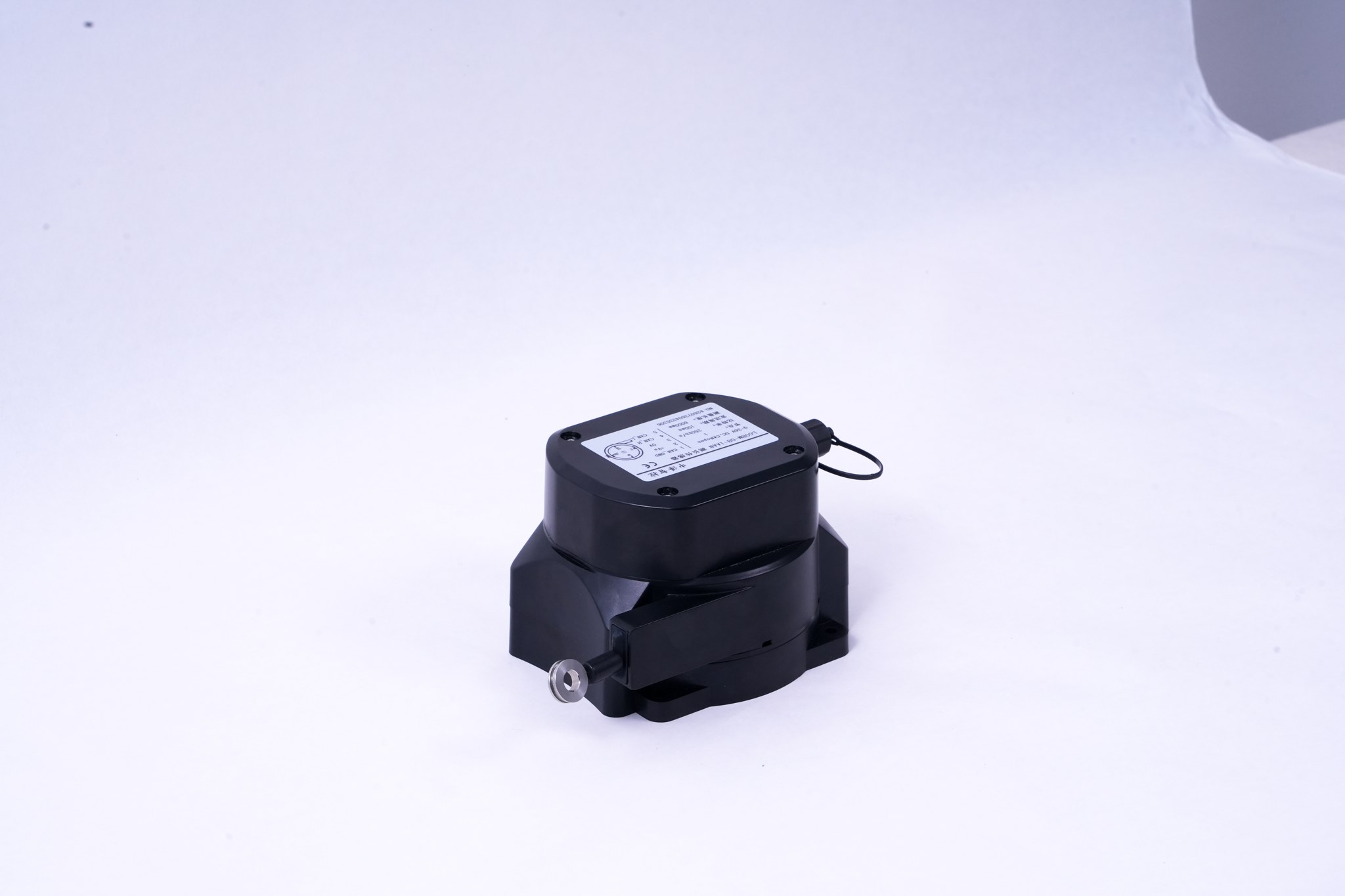
LG Series — 3 to 12 m
Compact standard sensor for crane and AWP booms. Optional angle output, redundant versions available.
LG series details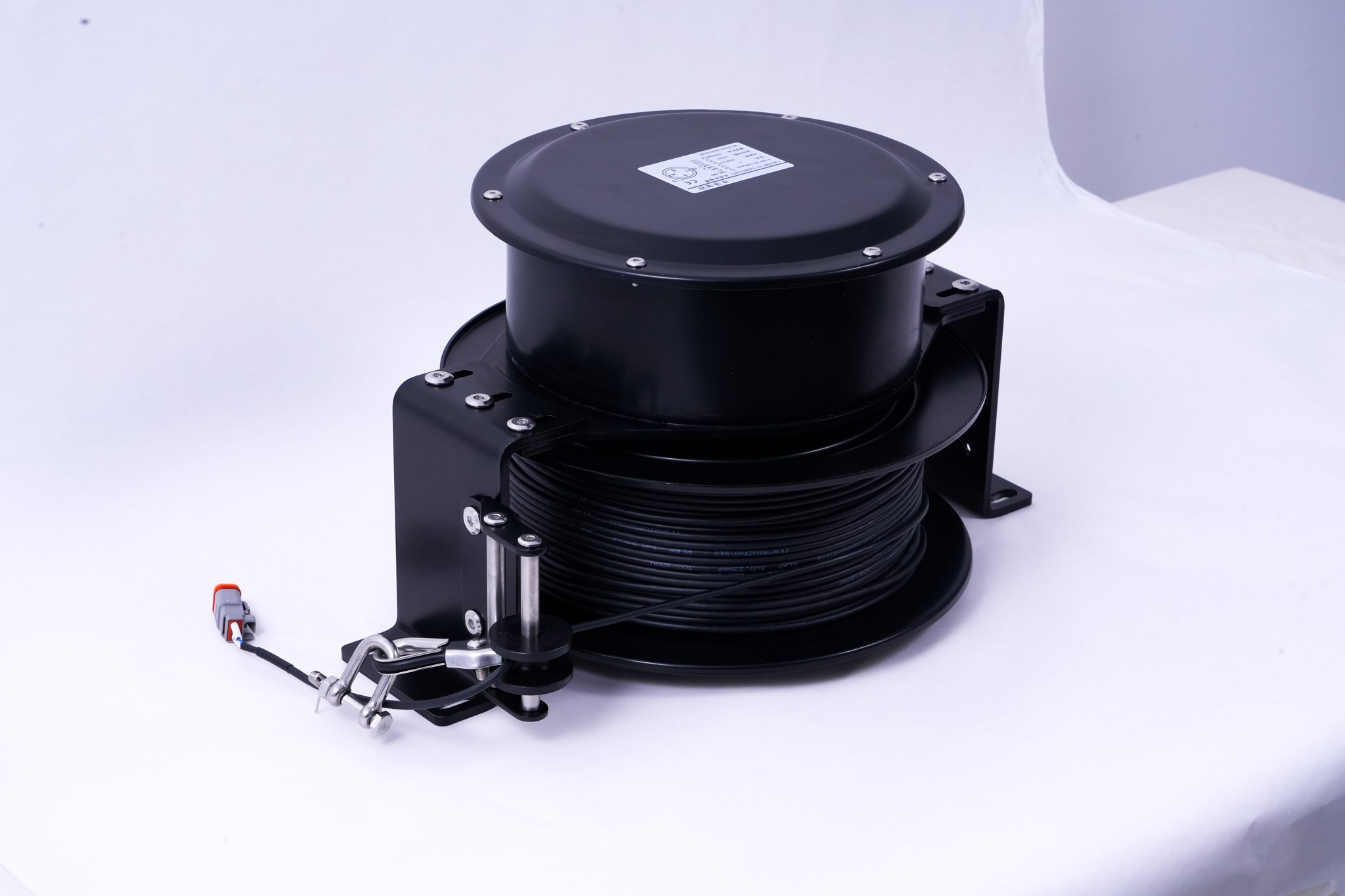
LAS Series — 15 to 35 m
Long-range sensor in a carbon steel housing for large machines and long booms.
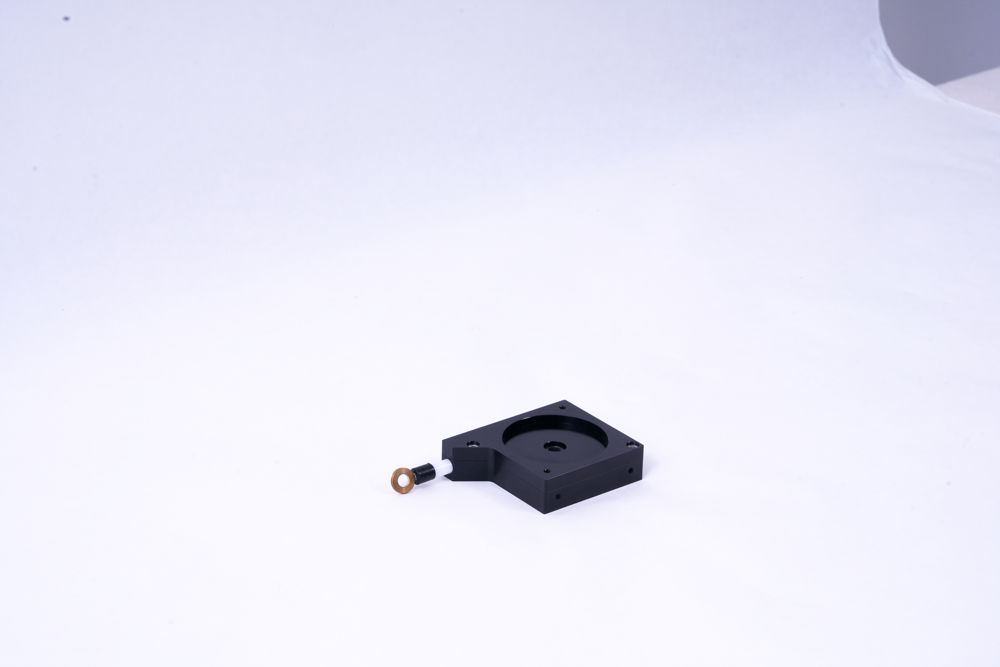
LTE Series — 1.25 to 10 m
Economy slim series for compact installations. Integrated encoder, >500,000 pull cycles.
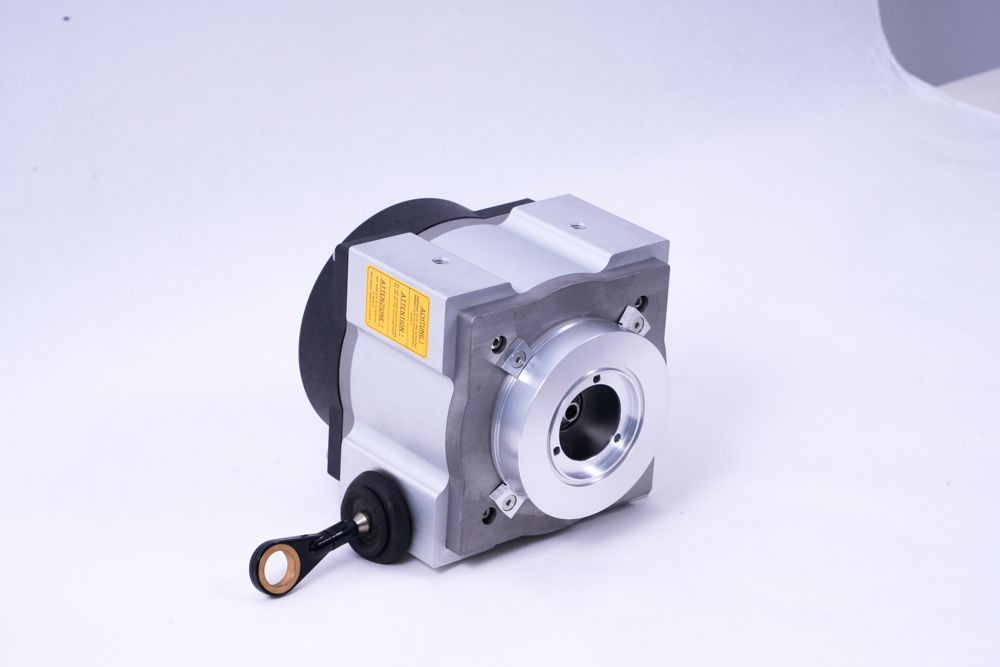
LTF Series — 3 to 15 m
Precision series in an aluminum alloy housing, 10 g vibration resistance.
Compare series
| Series | Range | Housing | Temperature | Protection | Cable life | Interface |
|---|---|---|---|---|---|---|
| LG | 3–12 m | Engineering plastic (PC) | −40 to +85 °C | IP67 (electronics chamber) | ≥150,000 (8M) / ≥100,000 (12M) | CANopen |
| LAS | 15–35 m | Carbon steel | −40 to +85 °C | IP67 (electronics chamber) | ≥100,000 (15M/25M) / ≥50,000 (35M) | CANopen / 4–20 mA / 0.5–4.5 V |
| LTE | 1.25–10 m | Aluminum alloy / engineering plastic | −20 to +70 °C | IP67 (encoder) | >500,000 | CANopen (via integrated encoder) |
| LTF | 3–15 m | Aluminum alloy | −20 to +70 °C | IP54 | >500,000 | CANopen |
All series: AISI 316 stainless steel wire rope, nylon-coated; max. cable speed 1 m/s. Supply 9–36 V DC (LG, LAS); LTE supply follows the integrated encoder.
Frequently asked questions
What is a draw-wire length sensor?
A sensor that measures linear displacement with a spring-loaded wire rope on a drum. The wire follows the moving part; an encoder turns drum rotation into a length signal.
How do I pick the right range?
Match the range to the full travel of the telescopic section, then take the next size up. LG covers 3–12 m; LAS covers 15–35 m.
What does IP67 cover on the LG and LAS?
IP67 applies to the electronics chamber. The cable outlet is IP54. Mount the unit with the cable outlet facing down or fit a rain cover on exposed installations.
Can one sensor measure length and angle together?
Yes. The LGH and LAS angle versions add a 0–360° angle output (±0.2°) in the same housing — see length & angle sensors.
What interfaces are available?
CANopen is standard on LG, LAS and LTF. LAS also offers 4–20 mA and 0.5–4.5 V. On LTE, the interface follows the integrated encoder.